Shapton Kuromaku 1000 vs 2000: Do You Need Both?
As an Amazon Associate, I earn from qualifying purchases. Steel and Strop is reader-supported — links to Amazon below use my affiliate tag, at no extra cost to you.
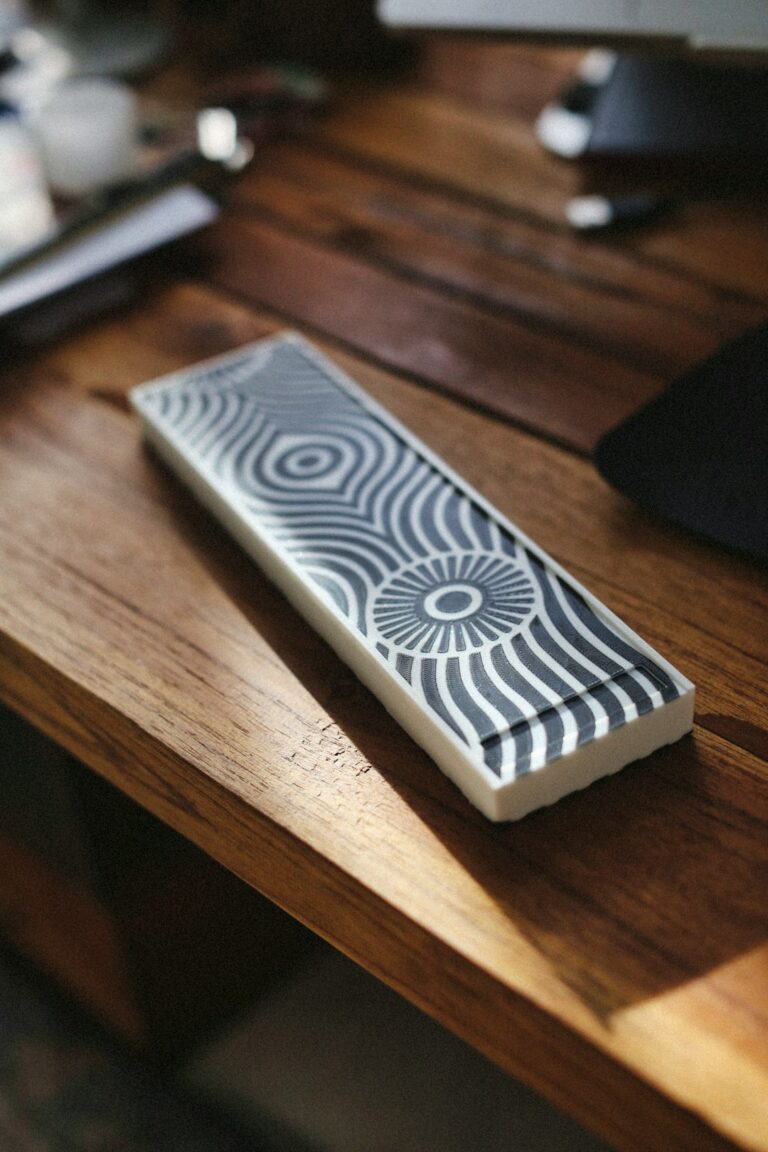
Most home cooks don’t need both. The 1000 grit handles repair and setting a new edge; the 2000 grit is a refinement step that mostly matters if you’re also using a dedicated finishing stone above it. If you own or plan to buy a 4000-plus finishing stone, the 1000 alone bridges the gap fine — save your money and skip the 2000 unless you specifically want a smoother intermediate step in the progression.
It’s an easy upsell to fall for: buy the 1000, see how good it is, assume the 2000 must be worth adding too. Sometimes it is. Often it’s a stone that sits mostly unused.
What each grit is actually doing
The 1000 is the workhorse — it’s coarse enough to repair a chipped or rolled edge and set a fresh bevel quickly, but fine enough to leave a genuinely usable, if not fully polished, kitchen edge on its own. The 2000 sits between that repair grit and a true finishing stone (4000 and up): it smooths out the 1000’s scratch pattern and leaves a noticeably cleaner edge, without going all the way to a mirror finish.
The question of whether you need it comes down to what’s above it in your progression. If your next stone after the 1000 is something in the 4000–6000 range, that stone is already built to remove 1000-grit scratches efficiently — the 2000 becomes a nice-to-have step that saves the finishing stone a bit of work, not a necessary bridge.
At a glance
| Grit | Job | Skip it if… |
|---|---|---|
| 1000 | Repair, setting a new edge, usable finish on its own | Never — this is the essential stone |
| 2000 | Smoother intermediate step before a finishing stone | You’re jumping straight to a 4000–6000 finishing stone anyway |
When the 2000 genuinely earns its place
If you’re sharpening a knife with a harder or more premium steel — SG2, for example — a smoother progression through the grits can make the final finishing stage faster and less work, since you’re removing less scratch depth at each step. It’s also worth it if you just prefer the process: some people find a four-stone progression more satisfying and produces a visibly cleaner edge at every stage, independent of whether the final cutting performance actually improves.
When it’s genuinely skippable
If your whole kit is a 1000 and a 6000, or a 1000 and an 8000, the jump is already well within what those stones are designed to handle — that’s a completely normal, widely used two-stone setup, and adding a 2000 mostly means spending money for a marginal smoothness gain most people won’t notice on a finished edge.
Who should buy which
Buy just the Kuromaku 1000 if you’re building a simple, effective two-stone kit with a finishing stone above it. Buy the 2000 as well if you’re chasing the smoothest possible progression, sharpening premium or harder steels regularly, or you just enjoy having the extra step in the routine.
Frequently asked questions
Do I need a 2000-grit stone if I already have a 1000 and a 6000?
Not really — a 6000 stone is built to smooth out a 1000’s scratch pattern on its own. The 2000 is a nice-to-have refinement, not a requirement.
What’s the difference between Shapton Kuromaku 1000 and 2000 in daily use?
The 1000 repairs and sets an edge quickly; the 2000 refines it further before a finishing stone. Both cut fast and splash-and-go — the difference is purely in the finish they leave.
Which grit should I buy first?
The 1000. It’s the more essential stone and can produce a usable edge on its own, which the 2000 alone can’t really do since it’s not designed for repair work.
Steel and Strop tests and compares kitchen knives and sharpening gear. Grit progression guidance reflects common practice among experienced sharpeners using Shapton’s stone lines.