Petty vs Paring Knife: Which Small Blade Do You Need?
As an Amazon Associate, I earn from qualifying purchases. Steel and Strop is reader-supported — links to Amazon below use my affiliate tag, at no extra cost to you.
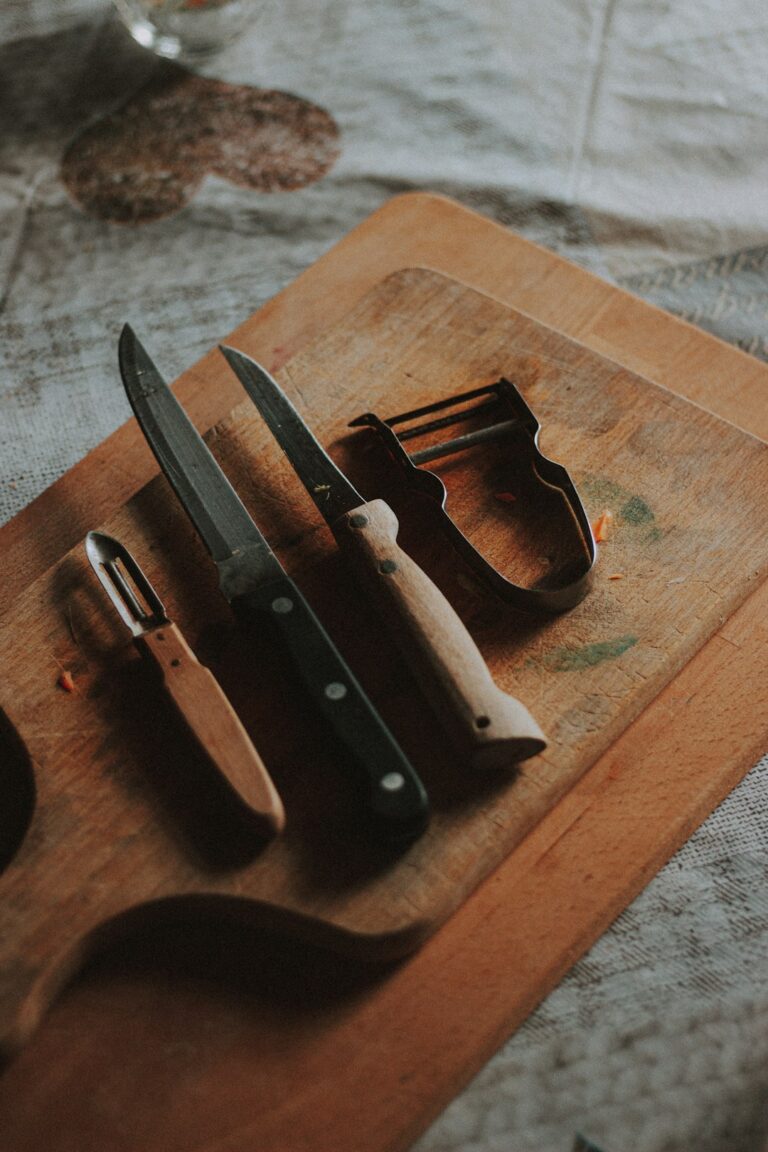
A paring knife is built for close, in-hand work — peeling, trimming, small precise cuts held against your thumb rather than on a board. A petty knife, despite being a similar size, is really a scaled-down version of a Japanese gyuto, meant to be used on a cutting board for smaller tasks a full-size chef’s knife is awkward for — slicing shallots, trimming small cuts of meat, portioning fruit. If most of your small-blade work happens in your hand, get a paring knife. If it happens on a board, a petty fits better.
These two get confused constantly because they occupy the same size range and both get filed under “the small knife,” but they were designed around genuinely different hand positions.
The hand-position difference that actually defines them
A paring knife’s whole design logic assumes you’re holding the food in one hand and the knife in the other, working close and controlled — peeling an apple, deveining a shrimp, trimming a strawberry. A petty knife is a board knife first: its blade profile and length are proportioned like a smaller gyuto, meant to be used the way you’d use a full-size chef’s knife, just at a scale suited to smaller ingredients or tighter cutting boards.
At a glance
| Feature | Paring knife | Petty knife |
|---|---|---|
| Primary use | In-hand work — peeling, trimming | Board work — small precise cuts |
| Blade profile | Simple, straight or slightly curved | Gyuto-like, more refined geometry |
| Typical origin | Western design tradition | Japanese design tradition |
| Typical steel quality range | Wide — often basic stainless | Often matches higher-end Japanese steel lines |
Why a petty isn’t just “a longer paring knife”
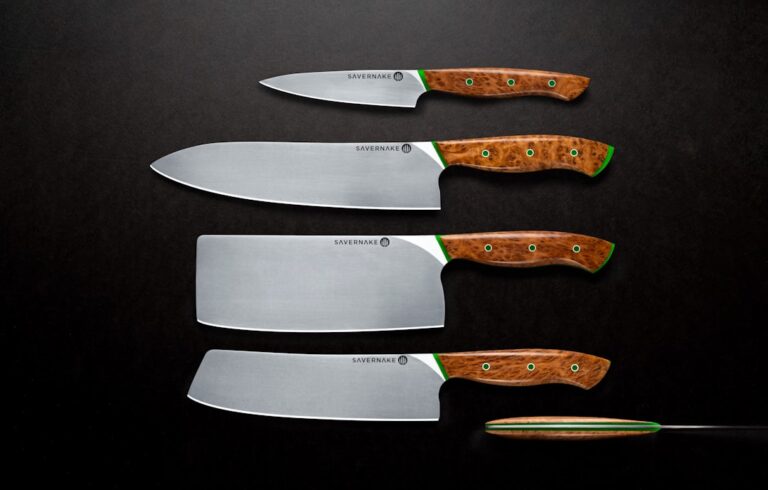
Because petty knives come from the same design tradition as gyutos, they’re often ground with the same care and the same quality steel as a maker’s full-size knives — it’s genuinely common to see a petty offered as a smaller sibling in the exact same line as a maker’s chef’s knife. A paring knife, by contrast, is frequently treated as a basic, low-cost utility piece even within otherwise premium knife sets, since its job doesn’t demand the same edge geometry.
Can one replace the other?
Loosely, yes, and plenty of people do use whichever one they own for both jobs without real complaint. But each does its intended job better: a paring knife’s simpler blade is easier to control in-hand for close peeling work, while a petty’s longer, thinner geometry handles board tasks — slicing a shallot, trimming fat off a small cut — with more precision than a stubbier paring blade manages.
Who actually needs both
Someone who cooks often enough to have a dedicated small board knife alongside their main chef’s knife benefits from owning a petty. A paring knife remains worth having regardless, since in-hand tasks like peeling and deveining come up in almost every kitchen no matter how the rest of your knife set is built.
Frequently asked questions
Is a petty knife just a bigger paring knife?
Not really — it’s closer to a scaled-down chef’s knife, designed for board work, while a paring knife is designed for in-hand tasks. The size overlap is coincidental to their different design purposes.
Can I use a petty knife instead of a paring knife?
You can, though a petty’s longer, thinner blade is less ideal for close in-hand peeling than a purpose-built paring knife.
Do I need both a petty and a paring knife?
Not strictly, but frequent cooks often benefit from having both, since each handles its intended task more comfortably than the other does.
Steel and Strop tests and compares kitchen knives and sharpening gear. This comparison reflects manufacturer specifications and consistent, long-running owner and enthusiast reporting on both knife types.