Electric Sharpener vs Whetstone: What You Give Up for Speed
As an Amazon Associate, I earn from qualifying purchases. Steel and Strop is reader-supported — links to Amazon below use my affiliate tag, at no extra cost to you.
An electric sharpener gets a dull knife functional in under a minute with zero skill required, and that convenience is real. What it costs you is control — fixed, often coarser angles that don’t match many Japanese knives, more aggressive metal removal per use that shortens a good knife’s working life, and no ability to fine-tune the finish. A whetstone takes longer to learn and use, but preserves far more of what you paid for in a quality blade.
The honest way to think about this isn’t “which is better” in the abstract — it’s what you’re willing to trade convenience for, and what knife you’re actually putting through either process.
What an electric sharpener actually does
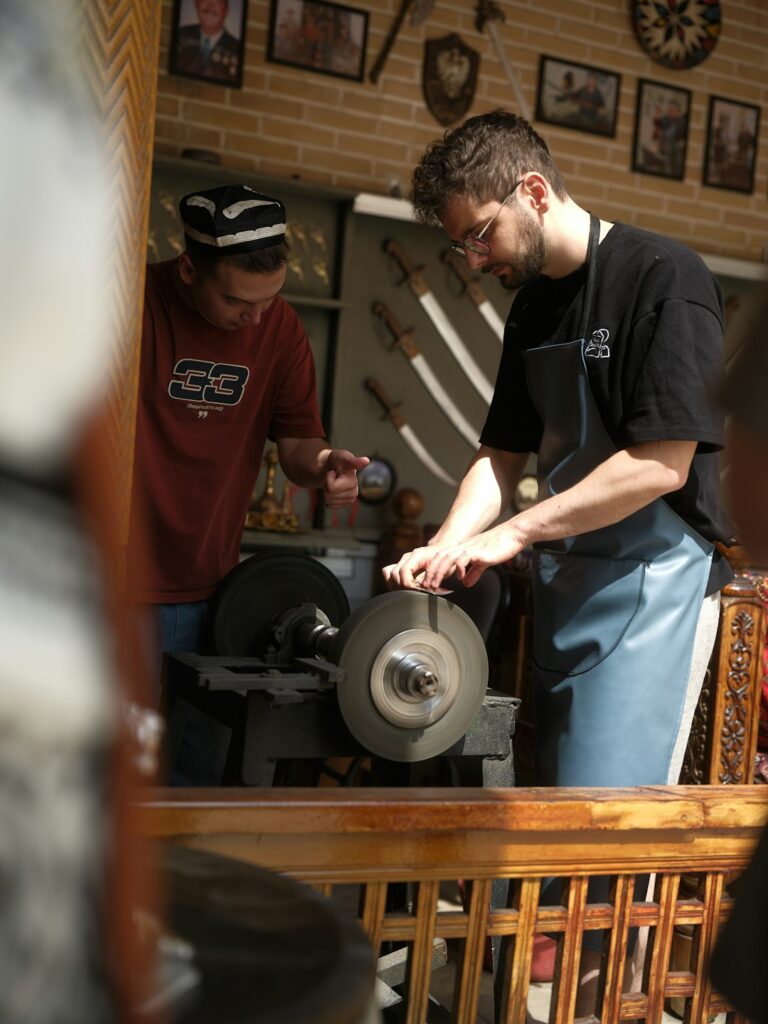
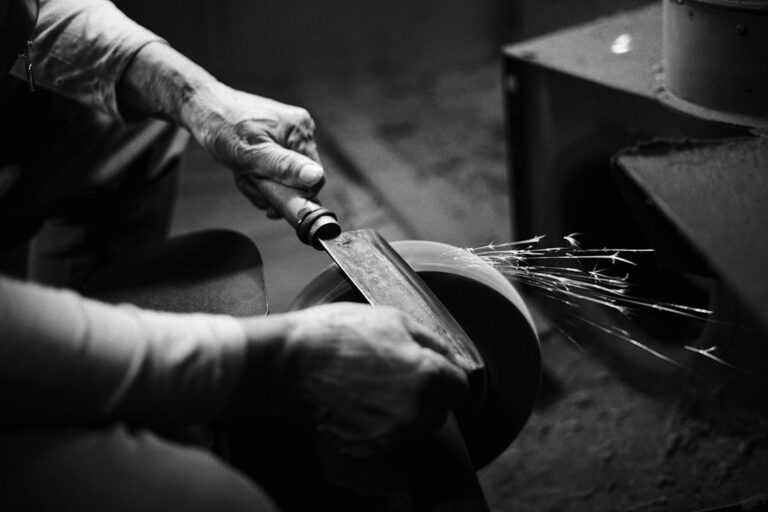
Motorized abrasive wheels spin at a fixed angle and grind the edge back to sharp in a few passes, guided by slots that hold the blade at a preset angle for you. It’s genuinely fast and genuinely foolproof in the sense that there’s very little technique to get wrong — you feed the blade through, and it comes out sharp. That speed comes from removing metal aggressively, which is exactly where the trade-off lives.
At a glance
| Factor | Electric sharpener | Whetstone |
|---|---|---|
| Time per sharpening | Under a minute | 10–20 minutes typical |
| Skill required | Minimal | Real learning curve |
| Metal removed per use | More aggressive | Controlled, as much or little as needed |
| Angle matching for Japanese knives | Often fixed, may not match | Fully adjustable |
| Long-term effect on a quality blade | Shortens working life faster | Preserves the blade longest |
Why the angle mismatch matters more for good knives
Many electric sharpeners are built around fixed angles closer to 20 degrees per side, which suits many Western knives fine but is noticeably wider than the more acute edge many Japanese knives are ground at. Running a thin Japanese blade through an electric sharpener built for that wider angle effectively reprofiles the edge over time to something the knife wasn’t designed for, grinding away more of the original geometry than the knife actually needed to lose.
Where an electric sharpener genuinely makes sense
For a budget everyday knife you’re not precious about, or a household where getting something functional fast matters more than preserving fine edge geometry, an electric sharpener solves a real problem with minimal effort. It’s also a reasonable option for someone who has already decided sharpening is not a skill they want to invest time in learning, and just wants the knife usable.
Where it becomes a genuinely costly mistake
Running a quality Japanese knife — anything with a VG-10, AUS-10, or SG2 core, for instance — through a generic electric sharpener repeatedly will grind away far more of the blade’s life and original geometry than the same number of whetstone sharpenings would. If you spent real money on the knife specifically for its edge quality and retention, an electric sharpener quietly works against the reason you bought it.
The honest recommendation
Match the tool to the knife, not the other way around. A budget stainless knife tolerates an electric sharpener fine. A knife you chose for its steel and edge geometry deserves a whetstone, or at minimum a guided system that respects its actual angle — anything else is spending good money on a knife and then treating it like the cheap one it wasn’t.
Frequently asked questions
Will an electric sharpener ruin a Japanese knife?
Not instantly, but repeated use can reprofile the edge to a wider angle than the knife was designed for and remove more metal than necessary over its lifetime.
Is an electric sharpener good enough for a budget knife?
Yes — for an inexpensive everyday knife, the speed and simplicity outweigh the downsides that matter more for premium steel.
Can you use a whetstone if you’ve never sharpened before?
Yes, though expect a real learning curve. Starting with a guided system is a common middle ground between whetstone control and electric-sharpener simplicity.
Steel and Strop tests and compares kitchen knives and sharpening gear. This comparison reflects manufacturer specifications and consistent, long-running owner and enthusiast reporting on both approaches.