Dalstrong Shogun vs Shun Classic: Marketing vs Steel
As an Amazon Associate, I earn from qualifying purchases. Steel and Strop is reader-supported — links to Amazon below use my affiliate tag, at no extra cost to you.
On paper, Dalstrong’s Shogun series claims a harder steel (AUS-10V, around 62 HRC) at a noticeably lower price than Shun Classic’s VG-MAX. In practice, Shun has decades of independently verified, consistent manufacturing behind it, while Dalstrong is a newer, marketing-forward brand whose claimed specs are harder for an average buyer to independently verify batch to batch. If consistent, well-documented performance matters more to you than the strongest spec sheet at the lowest price, Shun remains the safer bet. If you’re comfortable with a bit more brand risk in exchange for an attractive price-to-spec ratio, Shogun is a reasonable knife.
This comparison exists because Dalstrong built its reputation on bold packaging and confident spec claims, which naturally invites the question of whether the knife underneath backs it up.
What each brand is actually selling
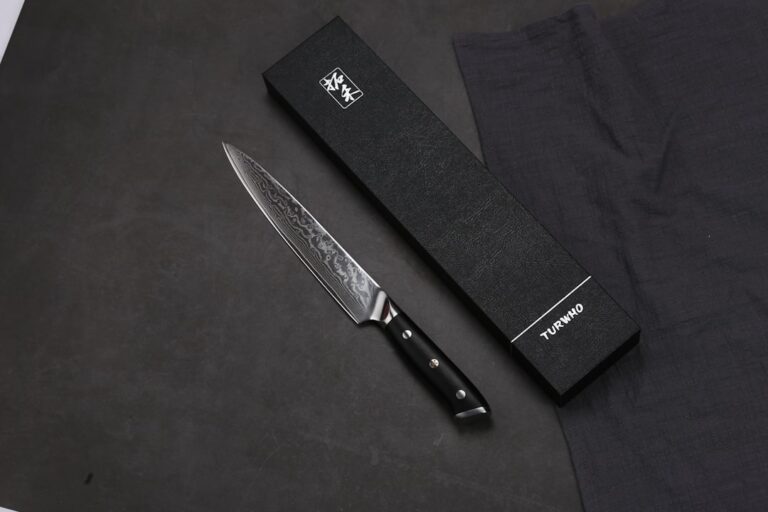
Dalstrong’s Shogun series uses AUS-10V, a vanadium-enhanced version of AUS-10, wrapped in Damascus cladding, with the brand claiming a hardness around 62 HRC — a genuinely strong number if accurate, sitting above where Shun’s VG-MAX typically lands. Dalstrong’s marketing leans hard into aggressive branding and confident performance claims, and the price is usually well below Shun Classic for a knife with, on paper, a harder core steel.
Shun Classic doesn’t compete on spec-sheet numbers the same way — its VG-MAX core sits in a more middling hardness range, and independent lab testing (TechGearLab) has actually measured a sample well below Kai’s own claimed figure. What Shun has instead is decades in the market, a long, consistent track record with reviewers and professional kitchens, and a brand reputation built before “spec sheet marketing” became as central to how knives are sold online.
At a glance
| Spec | Dalstrong Shogun | Shun Classic |
|---|---|---|
| Claimed steel | AUS-10V, ~62 HRC claimed | VG-MAX, claimed 60.5 HRC (tested as low as 51 HRC in one sample) |
| Brand history | Newer, marketing-forward | Decades-long, independently reviewed track record |
| Price | Noticeably lower | Premium |
| Independent verification of specs | Limited third-party lab testing available | Some independent testing exists (with mixed results) |
| Handle | G10/composite, striking design | PakkaWood, widely praised comfort |
Why “the number on the box” deserves some skepticism either way
This comparison is actually a good reminder that manufacturer-claimed hardness figures, from any brand, are a starting point rather than a guarantee — Shun’s own discrepancy between claimed and independently tested hardness is proof of that from an established name, not just a newer one. Dalstrong’s claims may well be accurate; the honest issue is that there’s simply less independent, long-running testing data available to check them against compared to a brand that’s been reviewed for decades.
What you’re actually trading with the cheaper option
Buying Dalstrong isn’t a mistake — plenty of owners report being satisfied with the Shogun series for the price, and a strong price-to-spec ratio is a legitimate reason to choose a newer brand. The trade is less certainty: less accumulated, independently verified data on heat treatment consistency across production batches, and a shorter history to judge long-term durability against. Shun’s premium is, in part, the cost of that accumulated certainty.
Who should buy which
Buy the Dalstrong Shogun if you want the strongest claimed spec sheet for the lowest price and you’re comfortable with a newer brand’s shorter track record. Buy the Shun Classic if you’d rather pay more for a knife with decades of consistent, independently reviewed performance behind it, even knowing its own marketing numbers aren’t perfectly precise either.
Frequently asked questions
Is Dalstrong a reliable knife brand?
Generally, yes, based on widespread owner satisfaction, though it has a shorter and less independently documented track record than long-established names like Shun.
Is AUS-10V better than VG-MAX?
On paper, its claimed hardness is higher, but heat treatment and manufacturing consistency matter as much as the steel name — something that’s harder to verify independently for either brand without lab testing.
Why is Shun more expensive despite similar or lower specs on paper?
Much of Shun’s premium reflects its decades-long, independently reviewed reputation and manufacturing consistency, not just the raw steel spec.
Steel and Strop tests and compares kitchen knives and sharpening gear. Claimed specifications reflect manufacturer marketing for Dalstrong and manufacturer/independent lab data for Shun where available.